
Tug-e-nuff toys are the perfect toy for both interactive play and engagement during training.
🌟 Use the link below and discount code: LEADTHEWAY306 to get 10% OFF! 🌟
https://tug-e-nuff.co.uk/?ref=leadtheway306
Below are 4 games you can try with your tug-e-nuff toy!
•Hide & Seek – the perfect time to practice ”sit” & “stay”
•Find it- using a scent work with your dog is so enriching for your dog and a great way for you to utilise your dogs natural use of his nose.
•Toy switch- this is a great one for teaching impulse control. Using two high value toys you can switch between the two on command and then let your dog ”win” one of the high value toys.
•Chase- this is a great way to make your recall more fun and interactive which helps your dog to choose you over distractions and make coming to you rewarding. Building on using your dogs prey drive in a controlled way.
Ladder of Aggression
Ever wondered how you can tell if an aggressive situation is going to happen? Dogs gives off a who variety of signals before a bite actually happens.
By learning these signals you can prevent aggression from escalating into the final bite. The early signs are subtle, but the sooner you read the situation the higher your chance of avoiding and aggressive outcome.

Feeding Time
Something as simple as feeding time for your dog is a great opportunity to bond with you dog, train and establish positive leadership within your home. Ad lib feeding (when your dog has constant access to food) may feel like a good idea so that your dog never goes hungry but in actual fact when dogs are free to eat continually this increases the risk of obesity. This can cause a number of medical issues.
You cannot monitor their food intake and this may leave a decrease in the food intake to go unnoticed which can be a sign of illness.
This also effects training! When using positive rewards we often use a high value treat to encourage good behaviour via positive association. If your dog has constant access to food and is full, then there is no need for the treat so they are less inclined to work in training for their reward. *Obviously, we don’t always use food based rewards as our touch and praise is enough but in some cases using treats gives that higher incentive to carry out the desired behaviour during training in the early stages whether this be during puppyhood or in later stages with problem behaviours*
Loose Lead Walking
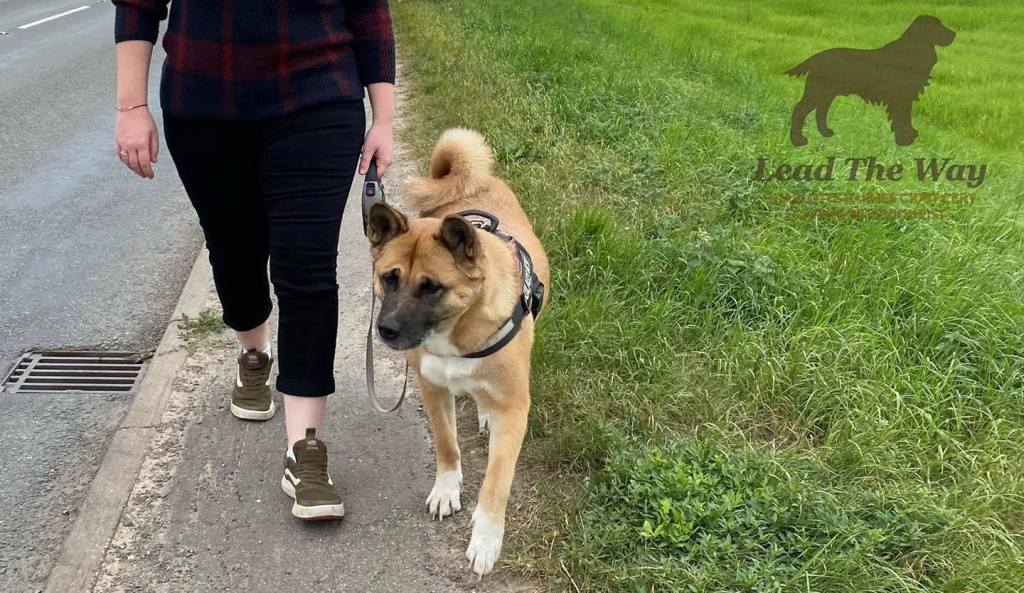
Having a dog able to walk on a loose lead makes walks more enjoyable for both dog and owner. If pulling on the lead or your dog being affected by distractions on your walks is an issue for you get in touch today to book in a training session to ensure you are following easy techniques that suit you and your dog to make loose lead walking a part of your everyday walks.
Potential Signs of Separation Anxiety
• Urinating/ Defecating when left alone.
• Excessive Barking or Howling
• Destructive Behaviour (chewing or digging)
• Pacing
• Coprophagia (eating faeces)
• Aggression displayed when a family member or the whole family leaves.
These are just a few of the signs to look out for when it comes to separation anxiety. These behaviours are not just signs of separation anxiety but are just a few examples, these behaviours may also be due to other issues.
 Lead The Way